In 2024, I had the opportunity to work on the first site-specific iteration of Breath Library – project developed in collaboration with Victoria Vesna and the team of UCLA Art|Sci Center. This time around, the series was supported by Utopia House – International Empathy Center, a cultural hub located in Kraków Nowa Huta. This area has a rich and vibrant history. Its Polish name translates to “New Steel Mill” in English, and it was established in 1949 as a socialist utopian model city. According to Wikipedia, it is considered the largest socialist realist settlement ever built.
The area, however, holds a deeper historical significance, as human settlements in this region date back to the Neolithic period, around 6000 BCE, as evidenced by archaeological discoveries. It also carries traces of a complex and often ambiguous recent history. In the 1950s, Nowa Huta was conceived as a model socialist utopian city, offering new opportunities to rural youth from across the country. At the same time, it gradually became a focal point for protest movements opposing the oppressive mechanisms of the post-WWII Polish state, which operated under the shadow of the Soviet Union and within its sphere of influence.
The post-1989 history of Nowa Huta is equally compelling. Its renowned steel mill faced the challenges of economic and social transformation, as well as the pressures of globalization. Taken over by ArcelorMittal in 2005 (formerly Mittal Steel Company), the mill continued operating for 15 more years. In November 2020, it was decided that its blast furnace would be permanently shut down. Today, the abandoned sites of the former steel mill are undergoing a natural transformation, as they are gradually reclaimed by nature. This phenomenon offers a unique perspective on urban post-industrial rewilding, serving as a living laboratory for what Ingo Kowarik described as “fourth nature.” (Bakshi, A., & Gallagher, F. (2020). Design with Fourth Nature. Journal of Landscape Architecture, 15(2), 24–35. https://doi.org/10.1080/18626033.2020.1852690).
In developing the site-specific iteration of Breath Library, I focused on exploring how breath, breathing, and voice could help uncover the layered stories embedded in Nowa Huta. My aim was to investigate how aspects of nature and industrial processes intertwine and entangle, particularly as experienced through embodied, affective human reactions. I conducted a series of four workshops in locations—both outdoor and indoor—that hold key significance for Nowa Huta. These sites were viewed as a living laboratory of post-industrial and post-catastrophic transformation, where nature’s devastation is often accompanied by processes of healing and renewal.
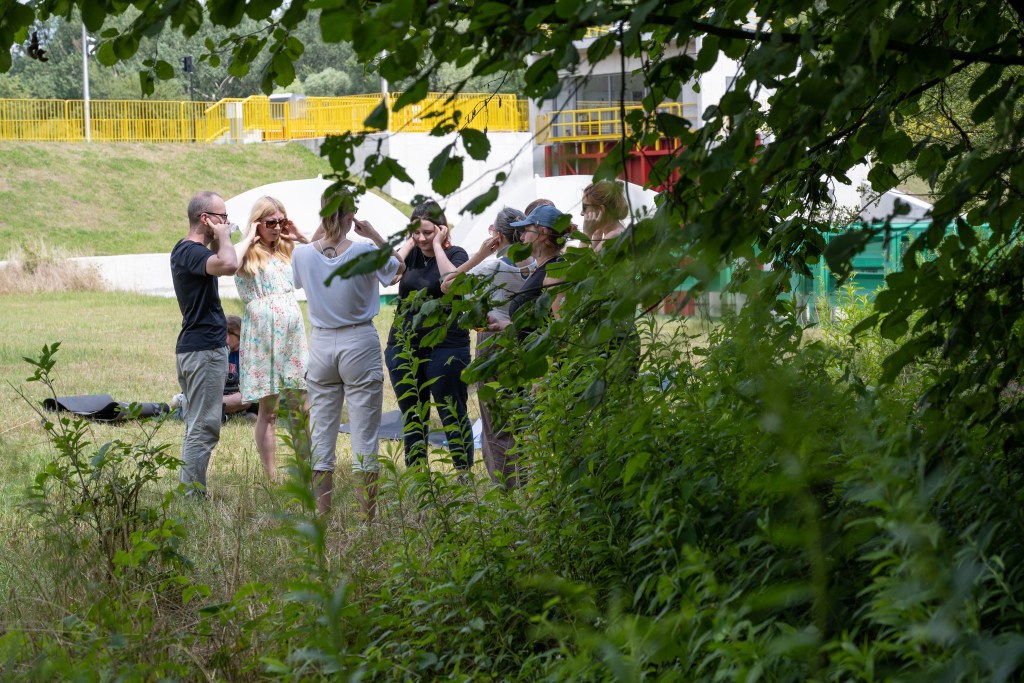
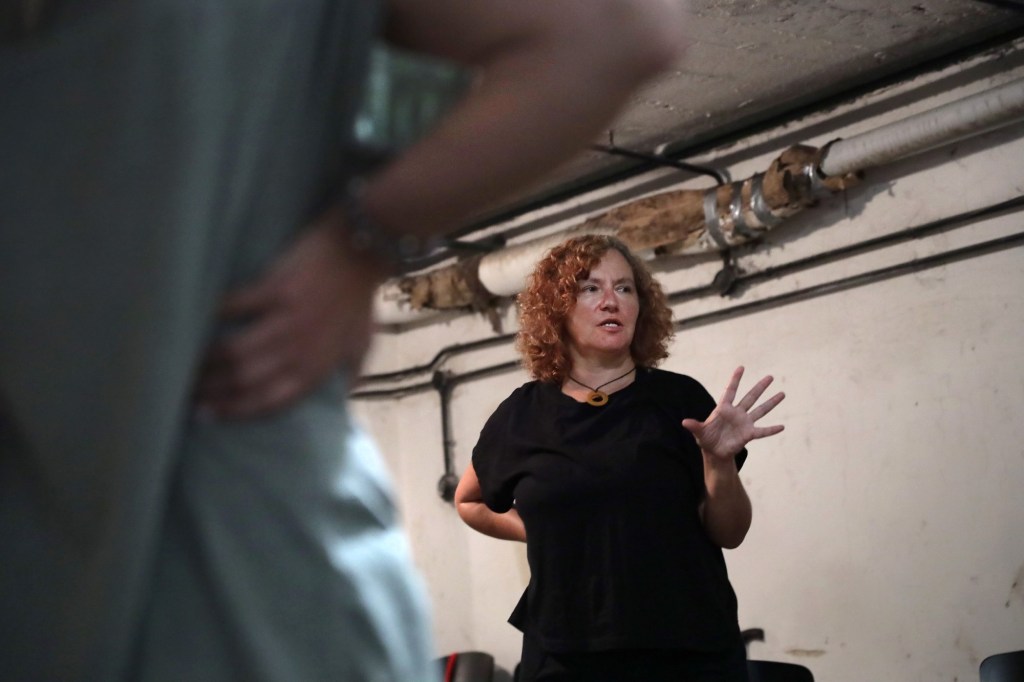
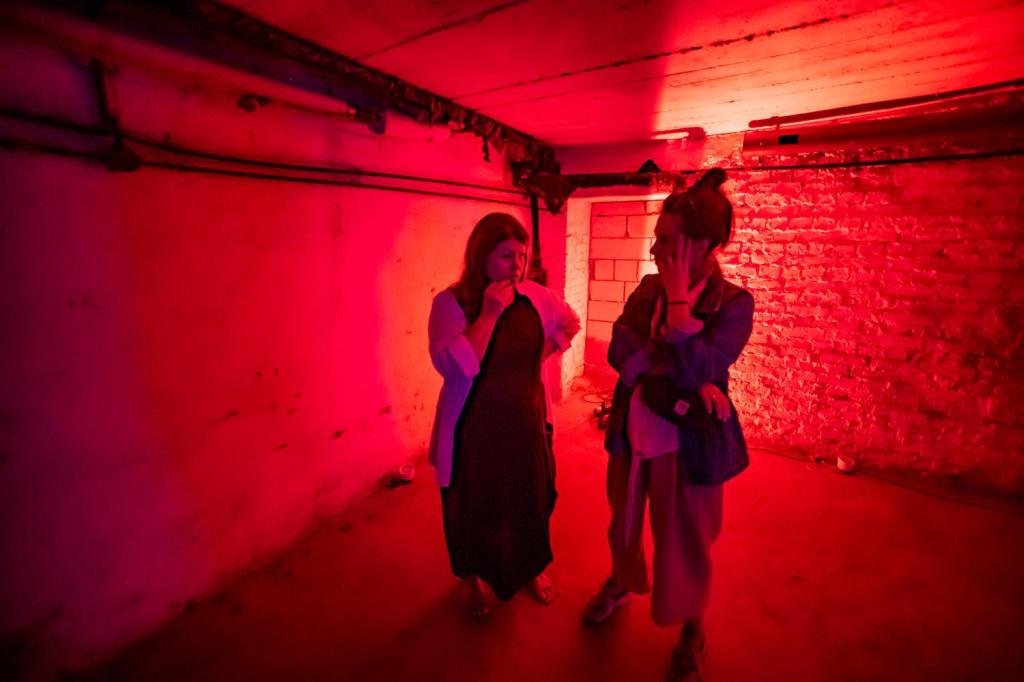
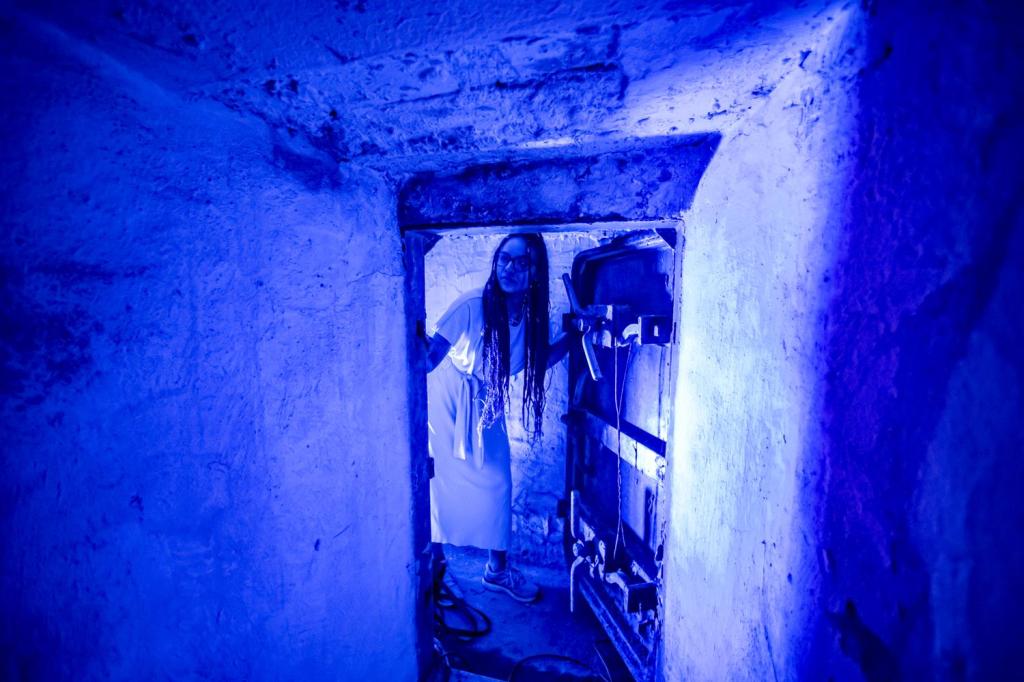
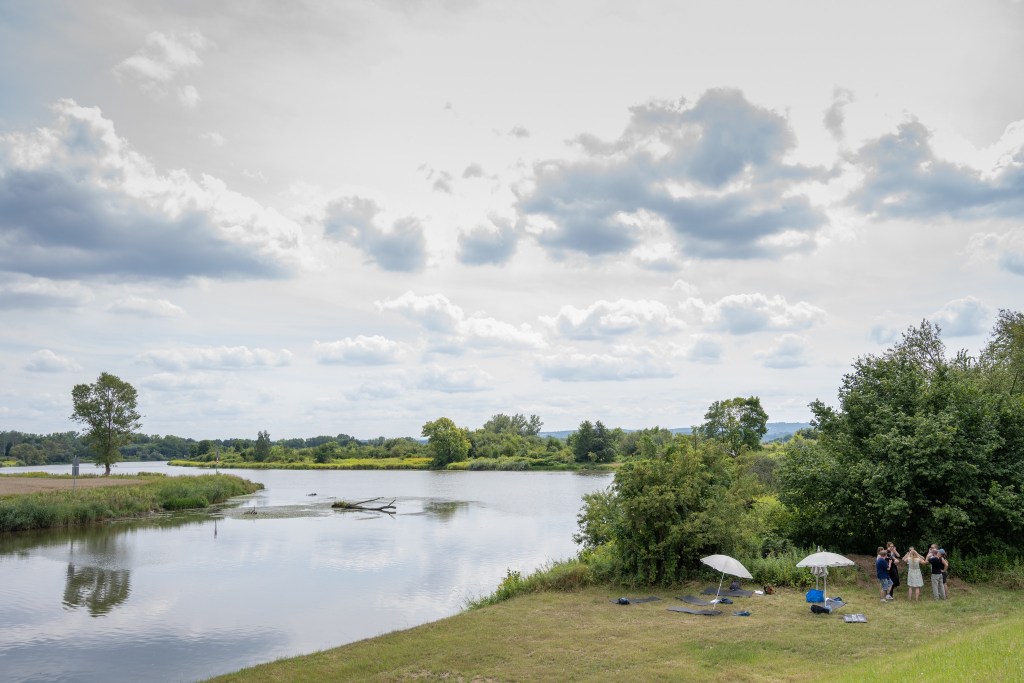
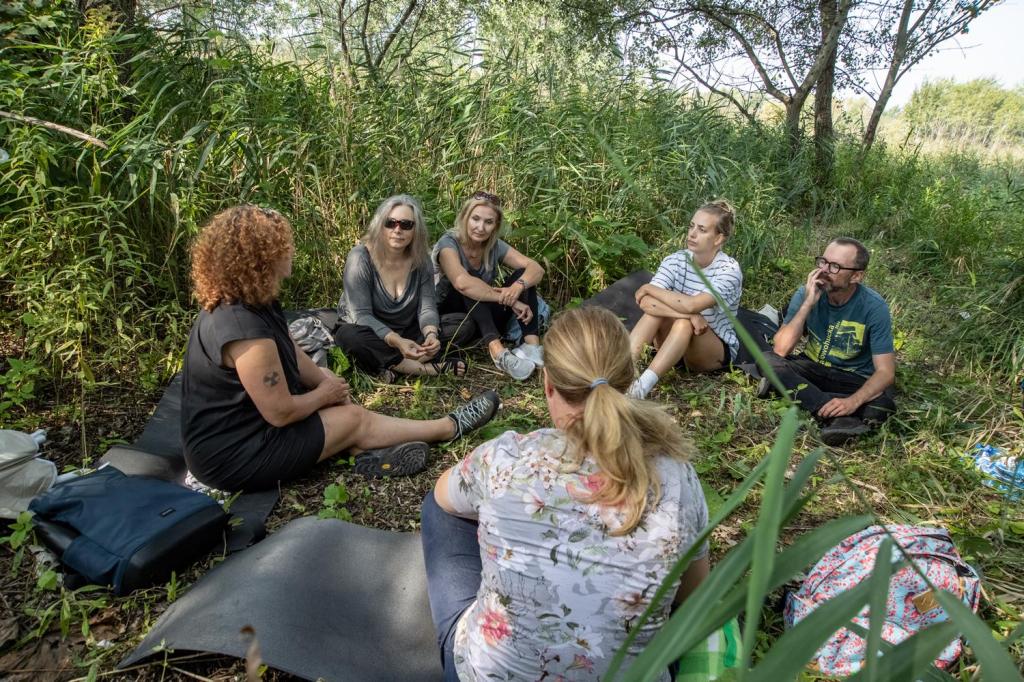

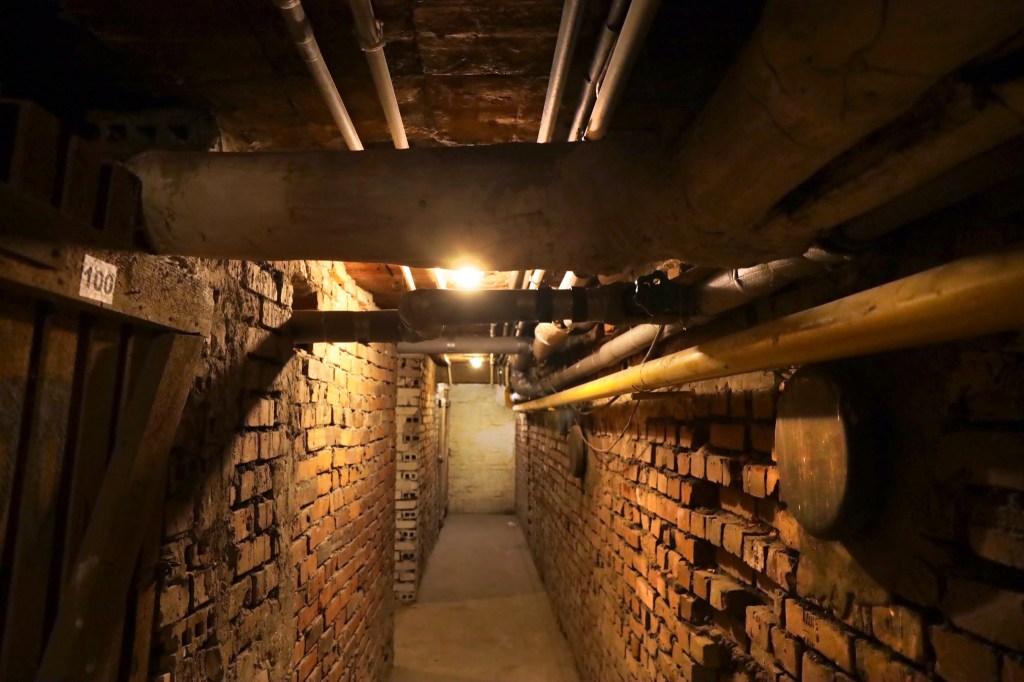
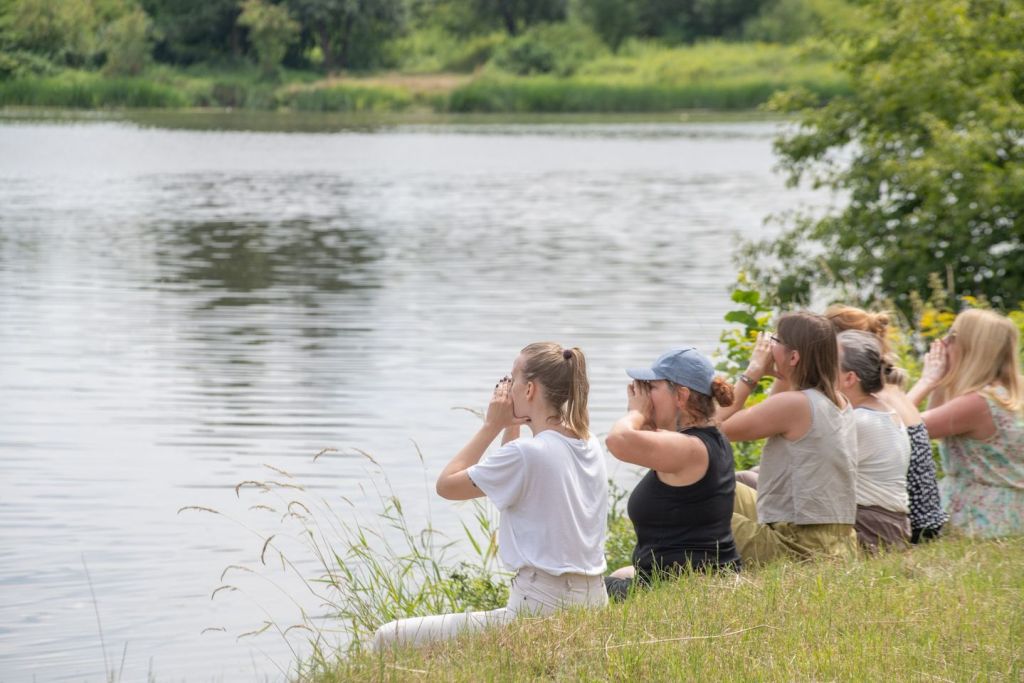
(fot. Artur Rakowski, Łukasz Trzciński, Dom Utopii)
With a group of participants ranging from 7 to 20 people (numbers varied slightly for each session), we explored the process of co-breathing in various environments. These included a picturesque site at the confluence of the Vistula River and an unused channel leading to a river port, located near the Thermal Waste Treatment Plant in Kraków. Other locations included a communal laundry-drying area within a heritage socialist housing project (Centrum A), an underground bomb and nuclear shelter in the same building, and the former industrial sedimentation tanks near the Vistula riverbed.(Google Maps with all the sites). Some of the sites were truly breathtakingly beautiful places, showcasing remarkable processes of rewilding. Here’s the Facebook fanpage with all the details (in Polish only).
We recorded a small number of breath samples in these diverse environments, which were then added to my collection. Using these recordings, I created a sound installation that was presented in an underground bomb shelter in Centrum A. The installation premiered on August 31, 2024.
In the meantime, I was also working on breath-based site-specific soundwalks for the UCLA Art|Sci Center’s project Atmosphere of Sound. Sonic Arts in Times of Climate Disruption. The soundwalks are available in the app accompanying the exhibition held under the same title, as a part of the Getty PST ART initiative.
 breathing in academe